
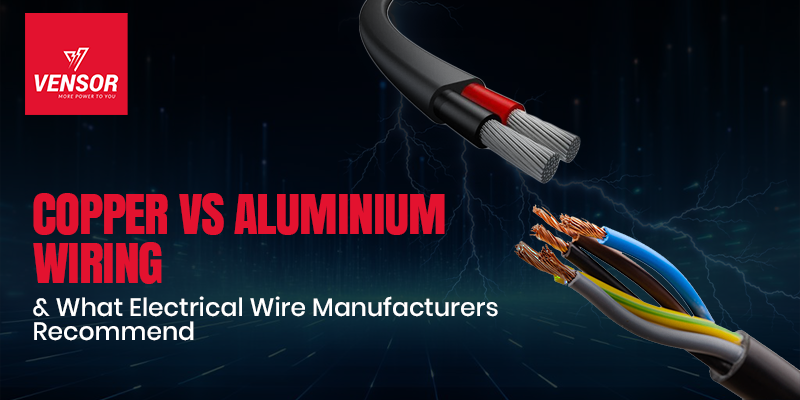
Electrical wiring is the key to every residential power system, yet it is one of the most overlooked parts of home planning. The choices made here affect safety, power stability, and long term peace of mind far more than visible fittings ever do. Copper and aluminium are the two main materials used for wiring, but their differences are not fully understood by several home owners. A wrong choice can result in voltage loss, excess heat, or regular repair work. Guidance from electrical wire manufacturers plays a key role in helping buyers match the right wire with load needs, budget limits, and safety rules. In this blog, we’ll compare copper and aluminium wiring and explain how to choose wisely for your home.
Major Differences Between Copper and Aluminium Electrical Wires
Conductivity Level
Copper is known for carrying electricity with less resistance. This allows power to flow smoothly and stay stable even when heavy appliances are running. Because of this efficiency, copper wiring supports high load usage along with fittings like the best modular switches in India without generating excess heat. Aluminium does not conduct electricity as efficiently, so thicker wires are needed to handle the same load. This can affect space planning inside conduits and panels.
Strength And Flexibility
Copper is stronger and bends easily during installation. Electricians prefer it for areas with tight turns or complex layouts because it holds its shape without damage. Aluminium is softer and less flexible. Repeated bending during installation can weaken it, which may reduce reliability inside walls over time.
Heat Resistance
During heavy power usage, copper stays more stable under heat. It expands less, which helps connections remain tight and safe. Aluminium heats up faster due to higher resistance, increasing the chance of loose joints if fittings are not done carefully.
Corrosion Behaviour
Copper naturally resists corrosion, even in indoor environments with moisture. Aluminium reacts with air and forms an oxide layer that can interfere with current flow at connection points. This makes special connectors and handling necessary.
Cost And Availability
Aluminium costs less than copper, making it attractive for large projects. However, copper offers better durability and lower maintenance over time. Brands such as Vensor company focus on balanced solutions that align safety with long-term value.
5 Factors to Choose the Right Electrical Wire for Your Home
Choosing the right wire is not only about price. It involves understanding usage patterns, safety standards, and future needs. The points below help homeowners make informed decisions with practical insight.
Load Requirement
Homes with high power usage need wires that support stable current flow. Copper is preferred for heavy appliances due to lower resistance. Electrical wire manufacturers recommend matching wire thickness with load to reduce overheating risks.
Installation Area
Wiring inside walls benefits from copper due to its strength and flexibility. Aluminium suits outdoor or overhead lines where space and weight matter. Installation location plays a strong role in material choice.
Budget Planning
Aluminium offers upfront cost savings, yet copper reduces repair and replacement expenses. Long-term planning favours copper for residential setups where safety is a priority.
Safety Standards
Local electrical codes influence wire selection. Copper meets residential safety norms with ease. Aluminium requires special connectors and skilled installation to maintain safe connections.
Switch Compatibility
Modern fittings demand stable conductivity. Copper supports premium accessories and works well with the best modular switches in India by maintaining consistent voltage and reducing wear on contacts.
Wrapping Up
Copper and aluminium wiring each serve specific purposes based on performance needs and budget limits. Copper offers superior conductivity, heat resistance, and durability, making it ideal for residential interiors. Aluminium provides a cost-effective option for larger spans where weight and expense matter more than compact strength. Understanding these differences helps homeowners avoid safety risks and unnecessary maintenance.
If you are also looking for high-quality cables that align with safety and performance needs, then Vensor Electricals Pvt. Ltd. offers carefully tested wiring solutions designed for residential reliability. We at Vensor company focus on materials that support long-term usage without compromise. Our approach reflects industry learning and practical application. So what are you waiting for? Explore our product range to choose wiring solutions built for dependable home electrical systems.
Frequently Asked Questions
Is copper wiring safer for homes?
Yes, copper wiring offers better heat resistance and stable conductivity, which reduces fire risk in residential settings.
Can aluminium wiring be used indoors?
It can be used with proper fittings and skilled installation, though copper remains the preferred option for home interiors.
Does aluminium wiring save money long-term?
It saves initial cost but may require higher maintenance, which can offset early savings over time.
Does Vensor Electricals Pvt. Ltd. provide copper wiring options?
Yes, Vensor Electricals Pvt. Ltd. offers copper-based wiring solutions that meet residential safety standards and usage needs.
Why choose Vensor Electricals Pvt. Ltd. for home wiring?
Our products focus on durability, safety compliance, and compatibility with modern electrical accessories for dependable home systems.