
Introduction
Electrical safety devices do not always get much attention until something goes wrong. A sudden fault, an overload, or a maintenance job can quickly show why the right protection matters. Two devices that often get mixed up are the MCB and the isolator switch. They may look similar inside a distribution board, but they do not do the same job.
That is where confusion starts. One protects a circuit automatically. The other helps disconnect power safely when manual isolation is needed. Simple difference, but an important one. For buyers comparing products from MCB switch manufacturers India, knowing how these devices work can make selection much easier and a lot more practical.
What Is An MCB?
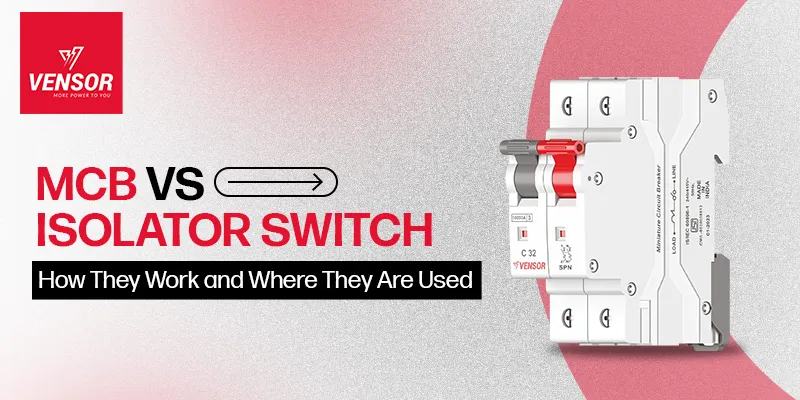
An MCB, or Miniature Circuit Breaker, is a safety device designed to protect an electrical circuit from overload and short circuit conditions. If the current goes beyond safe limits, the MCB trips automatically and cuts off the supply. That quick response helps reduce the risk of damage to appliances, wiring, and connected systems.
In everyday use, this makes MCBs a very common part of homes, offices, shops, and industrial panels. People often choose them because they are resettable, reliable, and easier to manage than traditional fuse systems. That is one reason products from MCB manufacturers in India remain a major part of modern electrical installations.
Uses Of MCB
The main purpose of an MCB is protection, but that broad job includes several practical uses.
First, it helps stop damage caused by overcurrent. If the current rises above the rated level, the breaker trips and interrupts the circuit. Second, it protects against short circuits, which can become dangerous very quickly if left unchecked.
Third, MCBs improve everyday safety by reducing the chance of wiring damage and electrical fires. They are also convenient because, unlike fuses, they do not need to be replaced after every fault. A user can simply reset the breaker once the issue is identified and corrected.
This is why any experienced switchgear company usually treats MCBs as a basic but essential part of low-voltage electrical protection.
What Is An Isolator Switch?
An isolator switch is different. It is a manual switching device used to disconnect a circuit from the power supply, mainly during maintenance or servicing work. It does not trip automatically during overload or short circuit conditions. That is not its job.
Instead, the isolator is used to make sure that a system is fully separated from the electrical source before someone works on it. In that sense, it is more about safety during inspection, repair, or equipment shutdown. A company such as Vensor India Electricals Pvt Ltd, which operates across broader electrical product categories, would naturally deal with both protection and isolation products because both are important in a complete electrical setup.
Uses Of Isolator Switch
An isolator switch is mainly used when manual disconnection is needed. This helps electricians or maintenance teams work on a circuit without worrying that power is still flowing through it. That alone makes it very valuable.
It also reduces risk during servicing of panels, industrial machines, and electrical boards. In larger installations, isolators are especially important because maintenance work often requires full separation from the supply before any internal component is touched.
Another practical use is system shutdown in controlled conditions. Since the isolator is not meant to break fault current under load, it is generally operated when the circuit is already off or unloaded. That distinction matters a lot. It is also why buyers comparing offers from MCB switch manufacturers India should not assume that an isolator and an MCB can replace each other.
What Is A Circuit Breaker?
A circuit breaker is a broad category of protective switching device used to interrupt electrical flow when abnormal conditions appear. An MCB is one type of circuit breaker, designed for smaller low-voltage applications. There are other circuit breakers too, including MCCBs and ACBs, depending on system size and load requirements.
This wider definition helps clear up one common misunderstanding. Every MCB is a circuit breaker, but not every switching device is an MCB. An isolator, for example, is a switching and disconnection device, not a fault-clearing breaker. That is why many MCB manufacturers in India focus heavily on precise ratings, tripping performance, and reliability standards, because the breaker has to respond automatically when something goes wrong.
Difference Between Isolator And MCB
|
Basis |
MCB | Isolator |
| Main Function | A protective device that trips automatically during overload or short circuit conditions | A manual device used to disconnect supply for maintenance or safe shutdown |
| Operation | Works automatically when a fault occurs | Operated manually by a person |
| Fault Handling | Can work under fault conditions and interrupt the circuit | Not meant to interrupt fault current in the same way |
| Purpose | Protects the circuit and connected system | Creates a safe, visible break in the line for maintenance work |
| Common Application | Widely used in residential and commercial boards for protection | Commonly used where maintenance and manual disconnection are required |
| Role In System Design | Helps prevent damage from overloads and short circuits |
Helps ensure safe servicing and equipment shutdown |
Why Both Devices Matter In One System?
People sometimes ask which device is better. Honestly, that is the wrong question. They are designed for different roles. An MCB protects. An isolator separates. In many installations, both are needed.
A complete electrical panel may use MCBs for branch protection and isolators for safe maintenance or controlled disconnection. That gives the system both automatic safety and manual servicing support. Brands like Vensor India Electricals Pvt Ltd fit naturally into this discussion because the market increasingly looks for broader electrical solutions rather than isolated single products.
Conclusion
MCBs and isolator switches may sit close to each other in an electrical panel, but they are not interchangeable. The MCB protects the circuit automatically when abnormal current appears. The isolator provides manual disconnection so servicing can happen safely. One responds to faults. The other supports safe maintenance.
A reliable switchgear company usually offers both because good system design depends on using each device for its proper purpose. That is why understanding the difference matters before choosing components for any installation. A stronger electrical setup does not come from using one device for everything. It comes from using the right device for the right purpose.
At Vensor Electricals Pvt Ltd, we understand that safe electrical systems depend on choosing the right components, not just filling a panel with parts. We offer dependable electrical solutions designed to support practical installation needs across protection, control, and everyday performance.
Choose smarter, safer electrical products with us today and get in touch to find the right solution for your requirements.
Frequently Asked Questions
Can An MCB Be Used As A Main Switch?
An MCB can switch a circuit on and off, but it is mainly designed for protection, not as a dedicated main isolating switch.
Does An Isolator Trip Automatically During A Fault?
No, an isolator does not trip automatically. It is a manual device used to disconnect power safely during maintenance or servicing.
How Do You Choose The Right MCB Rating?
The right MCB rating depends on the connected load, wiring capacity, and the type of application being protected.
Where Is An Isolator Switch Commonly Installed?
An isolator switch is commonly installed in distribution boards, industrial panels, and equipment setups where safe manual disconnection is required.
Why Are Both MCB And Isolator Used In Industrial Panels?
They are used together because the MCB provides automatic fault protection, while the isolator allows safe manual separation of the circuit during maintenance.