
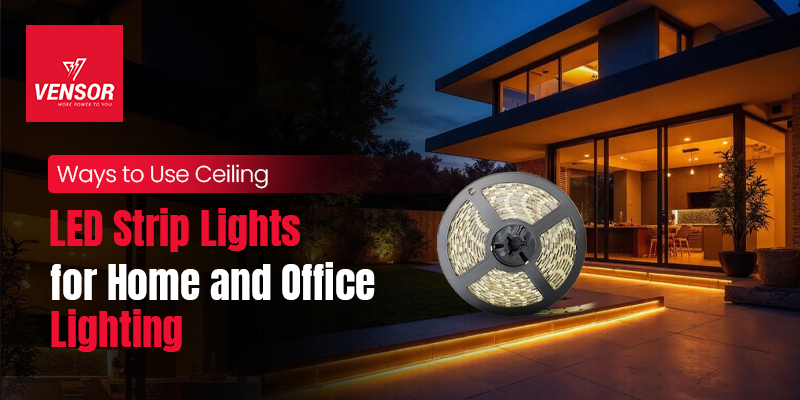
Across residential and commercial settings, lighting continues to underperform due to technological limitations and system limitations. Industry observations indicate that more than 60% of lighting inefficiencies stem from gaps in fixture spacing, wiring layouts, and circuit protection systems.
Even with high-quality fixtures installed, the lack of structured distribution results in visible issues such as glare pockets and voltage-related flickering.
This is where the role of ceiling LED strip lights becomes fundamentally different. Instead of functioning as isolated light points, they create a continuous layer of illumination that integrates with the overall electrical setup.
Proper wiring routes, load-balanced circuits, and controlled switching systems enable these strips to distribute light evenly across the space and prevent inconsistent patches.
Understanding Ceiling LED Strip Lights in Real Electrical Systems
LED ceiling light strips operate within a complete electrical network that includes wiring and cabling, PVC conduit pipes, and regulated power distribution systems.
When installed correctly, these strips provide linear illumination with controlled heat output. This becomes particularly effective when mounted inside aluminium channels and supported by safe switchgear systems such as MCBs and circuit protection units.
For example, in a mid-sized office with a 30-foot ceiling span, using ceiling LED lights without proper cable planning can cause dimming at the far end due to voltage drop.
However, when the same installation uses high-conductivity cables routed through PVC conduit pipes with a load-balanced driver setup, the brightness remains uniform from end to end. This ensures that the lighting performs consistently across the entire space, rather than weakening along the run.
Strategic Ways to Use Ceiling LED Strip Lights
A well-planned ceiling LED strip setup does not begin with placement alone. It starts with understanding how light interacts with space, structure, and electrical flow.
Each application builds on the previous one, ensuring consistent and functional lighting.
1. Cove Lighting with Controlled Electrical Distribution
Cove lighting becomes highly effective when paired with proper wiring and circuit protection. Instead of directly exposing light, strips are installed inside ceiling recesses, creating indirect illumination.
In a residential project, integrating warm white LED light (3000K) with concealed wiring inside PVC conduit pipes for electrical wiring ensures both safety and durability. In office environments, this setup reduces glare while maintaining voltage stability across long operating hours.
2. Perimeter Lighting with Structured Wiring Layout
Perimeter lighting is not just about aesthetics. It depends heavily on consistent cable routing and load balancing. In a commercial office, teams install ceiling LED strip lights along the perimeter using high-quality electrical wires and cables engineered for superior conductivity and insulation.
This typically results in a uniform light boundary without flickering, even during voltage variations. Unlike setups that rely on basic wholesale LED bulbs, structured strip systems with proper wiring deliver stable output over extended runs.
3. Integration with Modular Switches for Smart Control
Lighting efficiency improves significantly when ceiling LED strips are paired with modular electrical switches designed for functionality and durability. Instead of a single switch controlling an entire room, zoning the lighting through modular switches allows control over:
- Cove lighting
- Task lighting
- Accent strips
In a workspace setup, dividing strip lighting into three circuits reduced unnecessary power usage and improved operational flexibility. This aligns with modern smart wiring systems where lighting adapts to usage patterns rather than remaining static.
4. Task Lighting with Stable Power Supply Systems
Ceiling LED strip lights can function as precise task lighting when installed above work zones. However, their effectiveness depends on consistent power delivery and proper insulation.
In a modular kitchen, installing strips directly above the cooking area with support from reliable electrical accessories and fittings such as sockets and wiring components ensures uninterrupted performance.
Unlike central ceiling lights that create shadows, strip lighting eliminates dark zones, especially when paired with stable electrical infrastructure.
5. Highlighting False Ceilings and Structural Design
Modern ceiling designs often include layered gypsum structures. Ceiling LED strip lights can be embedded within these layers to create depth.
However, the key lies in precision installation supported by durable conduit systems and secure wiring pathways. Using PVC conduit pipes and fittings protects cables from environmental damage and ensures long-term reliability.
6. Corridor Lighting with Continuous Electrical Flow
Corridors often suffer from inconsistent lighting due to gaps between fixtures. Ceiling LED strip lights solve this by providing continuous illumination.
Commercial buildings can install these across a 40-metre corridor using engineered cables designed to withstand the rigours of electrical installations.
The continuous lighting line can eliminate dark patches while maintaining uniform brightness across the entire stretch. The system also includes switchgears such as circuit breakers and relays, ensuring protection against electrical faults.
Wrapping Up
Ceiling LED strip lights represent a smarter, more structured approach to lighting when integrated with proper wiring systems, high-quality components, and well-planned electrical layouts.
Whether it is cove lighting, task-focused setups, or corridor illumination, the real impact comes from combining the right products with the right electrical planning. At Vesnor Electricals Pvt Ltd, we deliver complete, reliable electrical solutions designed for modern spaces. As one of the trusted LED light manufacturers in Jaipur, we offer high-performance, durable electrical accessories designed for long-term efficiency.
If you are planning your next lighting project, explore our range of advanced solutions and discover how the right electrical foundation can transform your space. Contact us today to upgrade your lighting with quality-driven solutions from Jaipur’s trusted experts.
Frequently Asked Questions
1. Can ceiling LED strip lights handle continuous usage in offices?
Yes, when supported by proper wiring, switchgear protection, and stable drivers, they perform efficiently for long durations.
2. Why is wiring quality important for LED strip lights?
Poor wiring leads to voltage drops and flickering, while high-quality cables ensure consistent brightness.
3. Are modular switches necessary for LED strip setups?
Yes, they allow zoning and better control, improving both efficiency and usability.
4. How do conduit pipes improve lighting systems?
They protect electrical cables from damage and ensure the long-term durability of the installation.